Category AI in Education & Work

Artificial Intelligence (AI) is rapidly transforming how people learn, teach, work, and make decisions across educational and organizational settings. At Vishwajeet.org, AI in Education & Work is approached as an enabling technology that enhances human capability rather than replacing human judgment, creativity, or responsibility.

This category presents practical insights on how AI tools are being applied in classrooms, faculty development programs, research practices, corporate training, and workplace productivity. The articles explore the use of AI for learning design, assessment support, content creation, academic research assistance, HR processes, and decision support—while maintaining a strong focus on ethical use, academic integrity, and responsible adoption.

Rather than promoting tools in isolation, the emphasis is on understanding where AI adds value, where it creates risk, and how educators, trainers, managers, and professionals can integrate AI meaningfully into their workflows. Insights are informed by hands-on use of AI tools, teaching experience, faculty training sessions, and applied research in organizational behaviour and learning sciences.

This category supports institutions, organizations, educators, and professionals seeking clarity on AI adoption—helping them move from curiosity to competence, and from experimentation to structured, ethical, and effective use of AI in education and work environments.

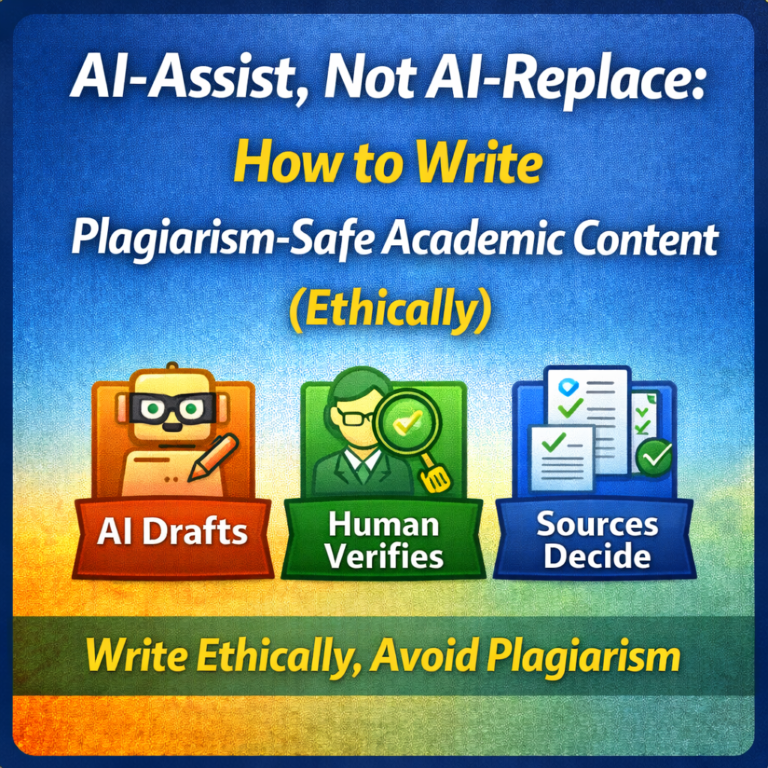
AI-Assist, Not AI-Replace: How to Write Plagiarism-Safe Academic Content

Using AI in academic writing is not automatically wrong—but using it without a defensible workflow is risky. This guide explains how to “AI-assist, not AI-replace” by building a verified source library, drafting from your notes (not from PDFs), using AI only for structure and clarity, and completing a final claim-to-source and citation authenticity audit. You also get practical do/don’t rules and ready disclosure templates aligned with major editorial guidance, so your work remains ethical, plagiarism-safe, and publication-ready.

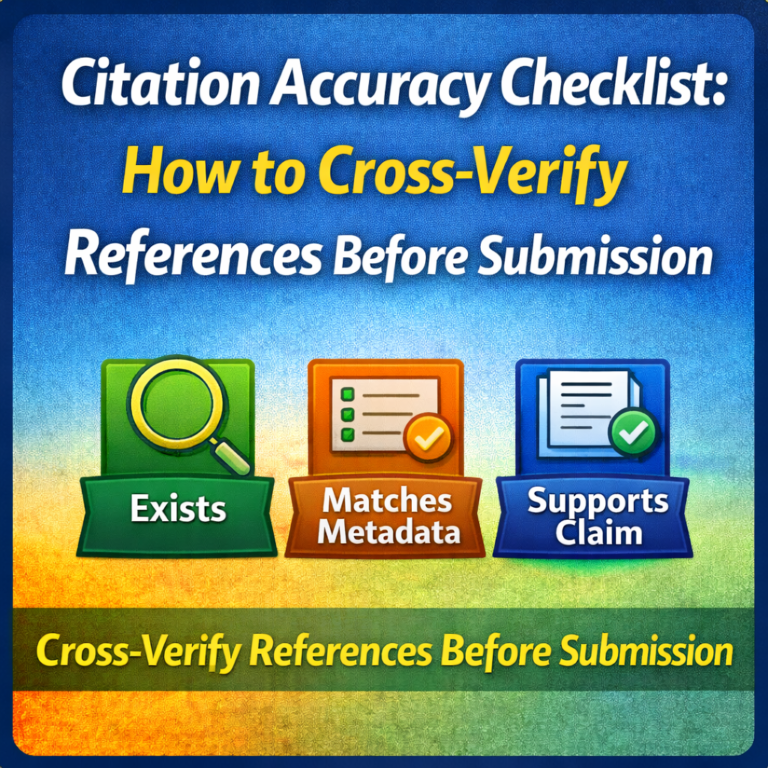
Citation Accuracy Checklist: How to Cross-Verify References Before Submission

Citation mistakes are not minor formatting issues—they are credibility issues. In the AI era, researchers face an additional risk: hallucinated references that look real but do not exist or do not support the claim. This article provides a practical pre-submission citation accuracy checklist, a step-by-step cross-verification workflow using trusted bibliographic sources and DOI metadata, and a ready “Citation Accuracy Audit Sheet” format. The goal is simple: every reference must exist, match its metadata, and support the sentence it is attached to—before you submit.

AI-Era Literature Review: A Step-by-Step Workflow for Faster, Better Papers

AI can make literature reviews faster—but it can also introduce fake citations and shallow synthesis if you do not follow a strict workflow. This guide provides a step-by-step, AI-assisted method grounded in SALSA and PRISMA-style transparency: define scope and questions, build a documented search strategy, screen in two passes, appraise quality, extract findings into a matrix, synthesize by themes, and verify every citation. You also get ready templates and quality controls to produce literature reviews that are both efficient and defensible.

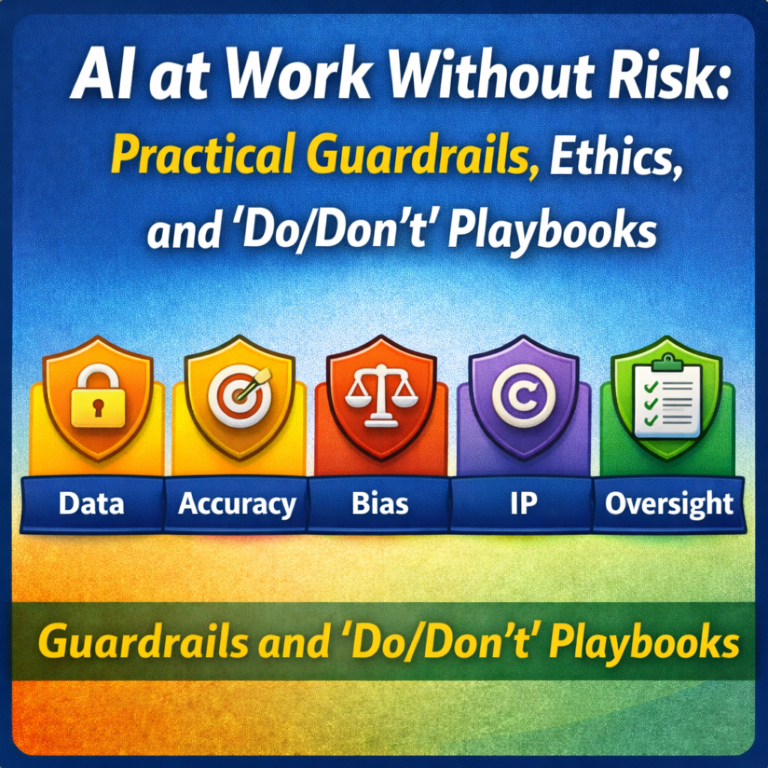
AI at Work Without Risk: Practical Guardrails & Ethics

AI risk at work is rarely “AI gone wrong.” It’s unclear rules, risky data handling, unverified outputs, and missing human oversight. This practical guide provides 10 workplace guardrails, simplified ethics that focus on real operational risks, and clear Do/Don’t playbooks by role—plus a lightweight governance checklist aligned to widely used frameworks such as NIST’s AI Risk Management Framework and ISO/IEC 42001. The result is safe AI adoption that protects people, data, and business outcomes—without slowing teams down.

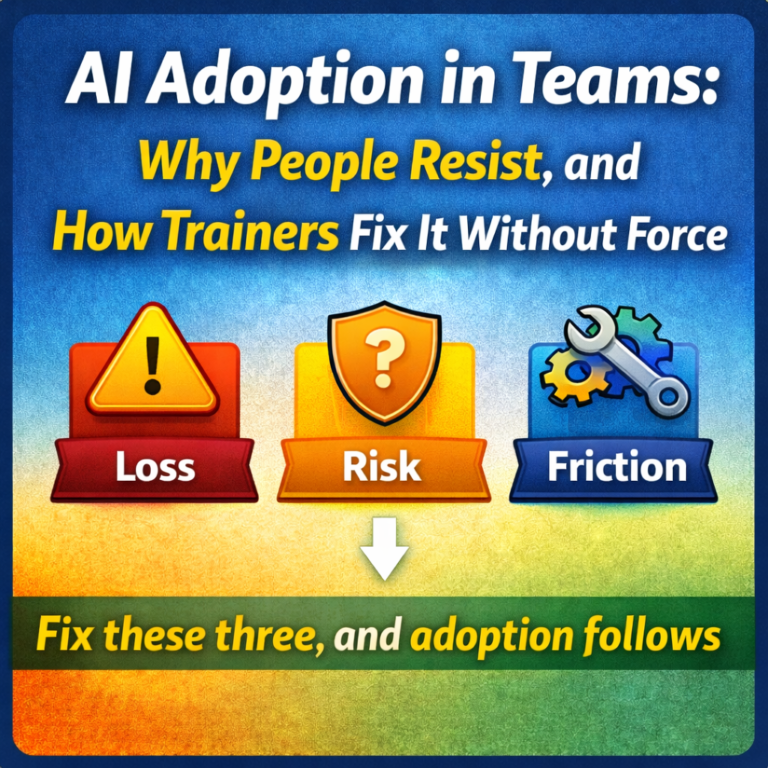
AI Adoption in Teams: Why People Resist and How to Fix It

Teams don’t resist AI because they “hate change.” They resist loss, risk, and friction. This post explains the six predictable reasons AI adoption fails—competence fear, unclear value, workflow friction, psychological risk, policy uncertainty, and missing reinforcement—and shows how trainers fix adoption without force. Using practical principles from the Technology Acceptance Model, psychological safety research, and structured change frameworks, you get a trainer-led playbook plus a 30–60–90 day plan to turn AI from a one-time experiment into daily team workflow.

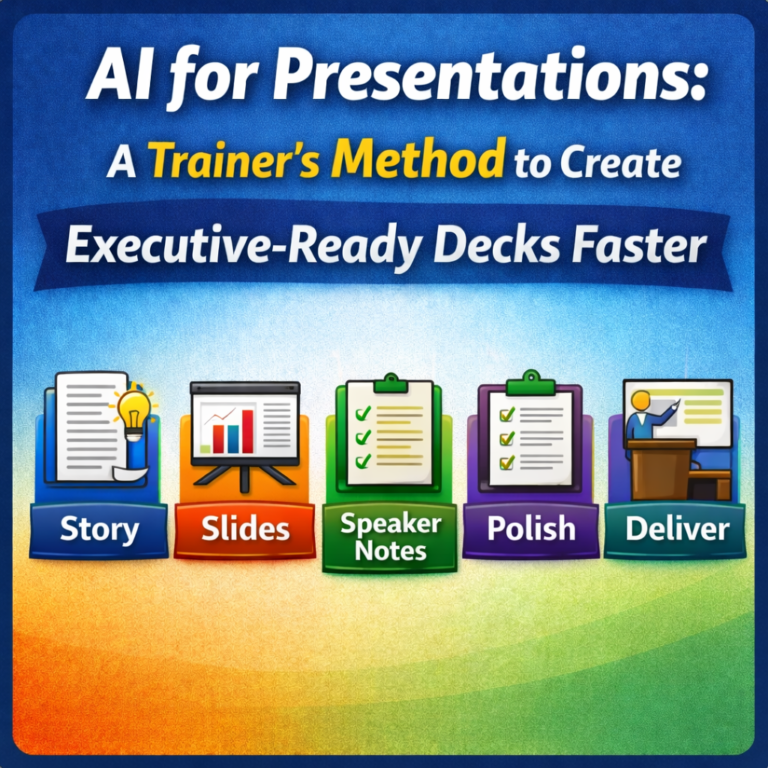
AI for Presentations: Build Executive-Ready Decks Faster

Executive-ready decks are not built by adding more slides—they are built by sharper structure. This post explains a trainer’s AI workflow to create presentations faster without sacrificing credibility: start with a one-page executive brief, convert it into a message-driven storyline, generate constrained slide content and speaker notes, then polish with an executive QA checklist. You also get copy-ready prompts and a 10-slide format you can reuse for leadership updates, proposals, and strategic reviews.

25 Prompt Engineering Templates That Save 5+ Hours/Week

Prompt engineering is not a technical hobby—it is a productivity system. This post shares 25 copy-ready prompts that help busy professionals draft emails, run meetings, summarize documents, create slide outlines, and produce decision-ready plans faster. You also get a simple prompt formula (instruction-first, clear context, forced output format) and a 10-minute weekly setup so these prompts become reusable workflow assets—saving 5+ hours per week through reduced rework and faster, cleaner communication.