Monthly Wellness Sessions for Frontline Workers: Engagement, Absenteeism, and Safety (YOJ Pack-Kraft)

wellness sessions improved engagement, built community, and supported absenteeism reduction through practical, activity-based learning.

Why Frontline Wellness?

Manufacturing roles are physically demanding, involving long shifts and manual handling. We recognized that to maintain high productivity, we must invest in the well-being of the people behind the machines. By addressing health proactively, we turn wellness into a strategic pillar of operational excellence.

  • Reduced fatigue-related injury risk.
  • Stronger employee-employer trust.
  • Enhanced morale for long-term retention.

Supportive hand shake

A Holistic Wellness Framework

Moving beyond generic health talks. We deliver structured interventions that align human well-being with organizational throughput.
Cognitive Resilience Training
Priority 01: Mental Readiness

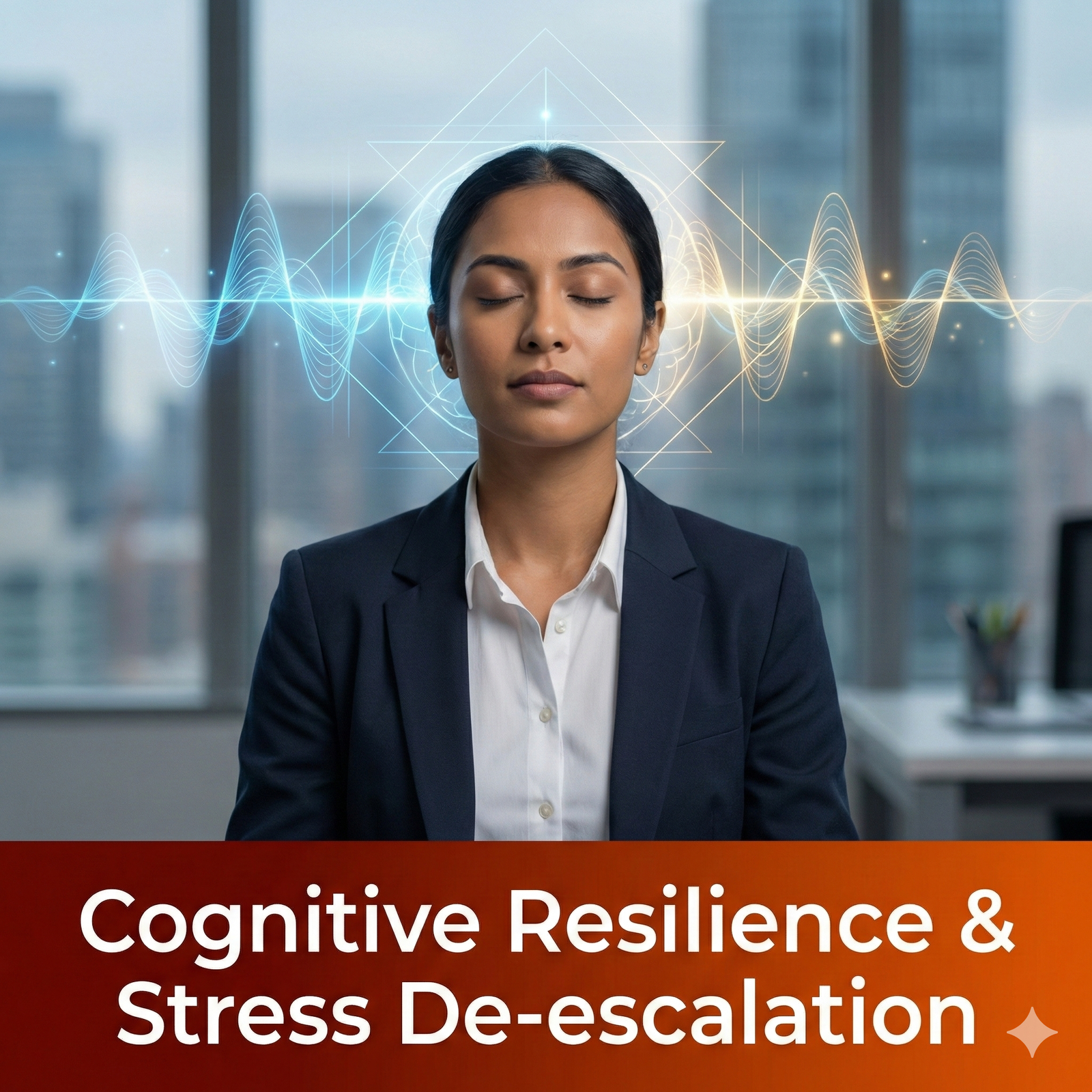
Cognitive Resilience & Stress De-escalation

In high-pressure manufacturing and volatile corporate environments, mental clarity is the ultimate performance multiplier. This program teaches teams to manage the "biological hijack" of stress, ensuring rational decision-making during peak production or crisis moments.

  • Panic response reduction
  • Focused attention training
  • Emotional self-regulation
  • Burnout prevention
Digital Fatigue Management
Priority 02: Information Management

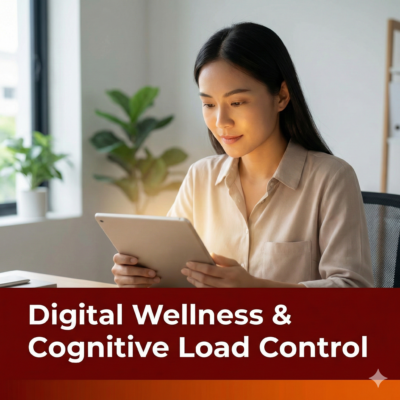
Digital Wellness & Cognitive Load Control

Digital transformation often brings information overload. We address "always-on" fatigue by providing frameworks for deep work, effective notification management, and cognitive recovery, ensuring technology remains a tool rather than a stressor.

  • Deep work enablement
  • Digital fatigue recovery
  • Enhanced focus cycles
  • Tech-stress mitigation
Social Wellness and Peer Support
Priority 03: Social Capital

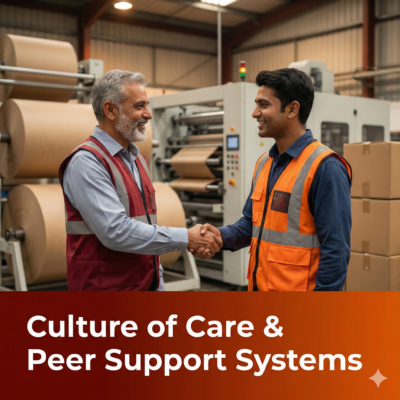
Culture of Care & Peer Support Systems

Wellness is a collective responsibility. This project establishes peer coaching networks where employees are trained to recognize signs of struggle in their colleagues, creating a psychologically safe environment that improves retention and trust.

  • Peer-to-peer empathy
  • Communication activation
  • Trust-based culture
  • Social safety net
Wellness for Leaders
Priority 04: Governance

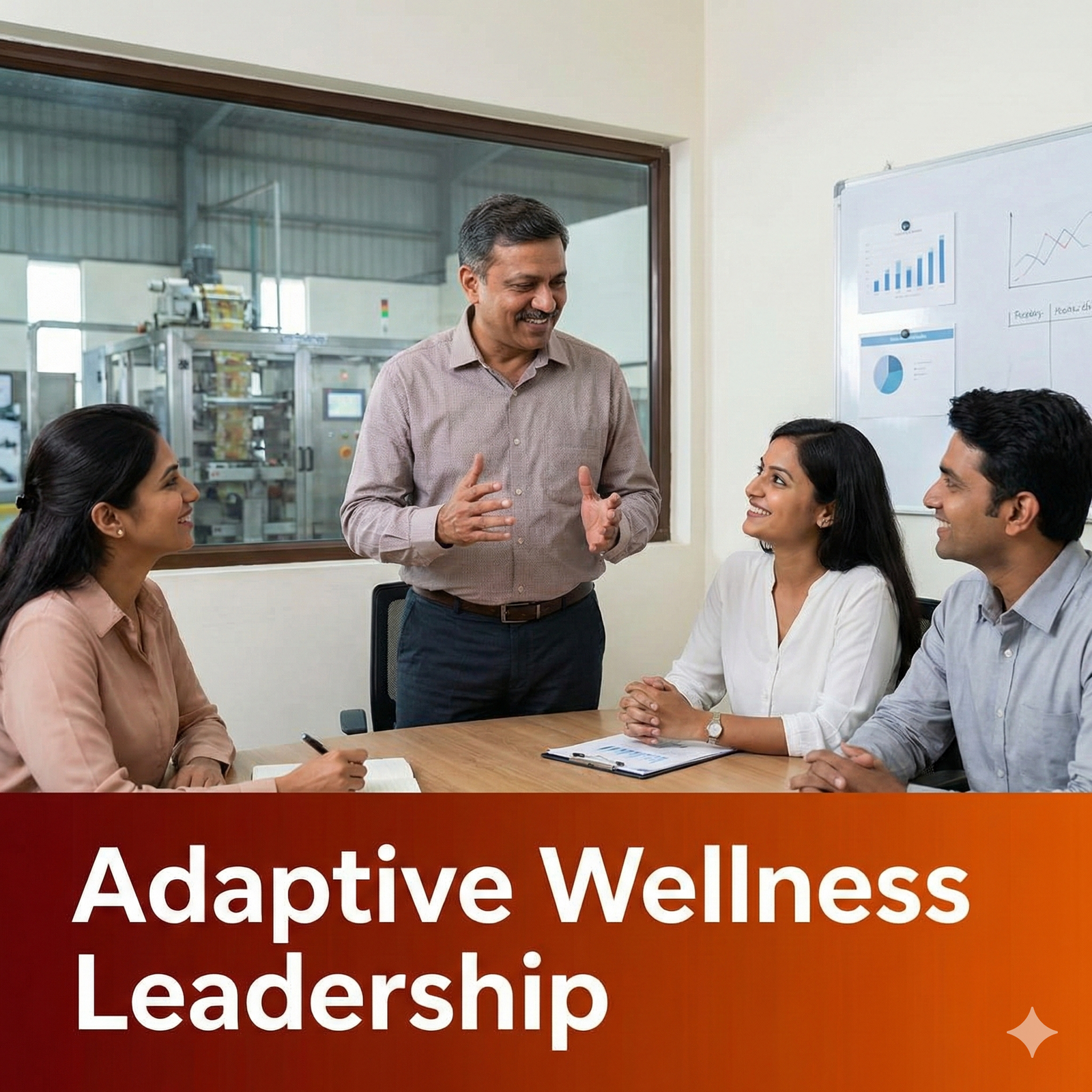
Adaptive Wellness Leadership

Supervisors are the primary influencers of workforce morale[cite: 106]. We train leaders to balance production targets with the paramount need for a safe, healthy environment, turning frontline managers into wellness advocates.

  • Empathy-led management
  • Burnout recognition
  • Morale boosting skills
  • Balanced KPIs
Nutrition and Energy
Priority 05: Biological Fueling

Nutritional Vitality & Energy Management

Sustained performance requires the right fuel. We provide practical guidance on hydration and nutrition tailored for hot factory environments or demanding corporate desk roles to prevent mid-day energy crashes.

  • Metabolic energy sync
  • Hydration protocols
  • Shift-work nutrition
  • Peak focus fueling
Behavioral Wellness
Priority 06: Automaticity

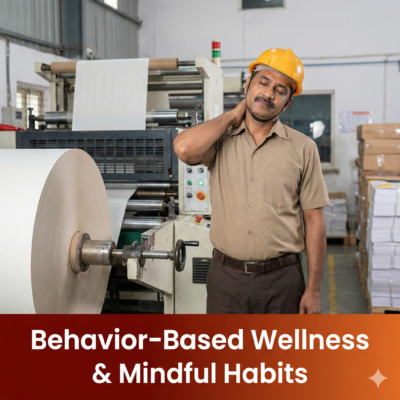
Behavior-Based Wellness & Mindful Habits

Knowledge alone does not change behavior. Using Behavioral Science (BBS principles), we convert wellness protocols into "muscle memory" habits that employees perform automatically, even during intense workloads.

  • Habit loop formation
  • Safe Choice architecture
  • Feedback-led change
  • Long-term adherence
Ergonomic Mastery
Priority 07: Physical Guardrails

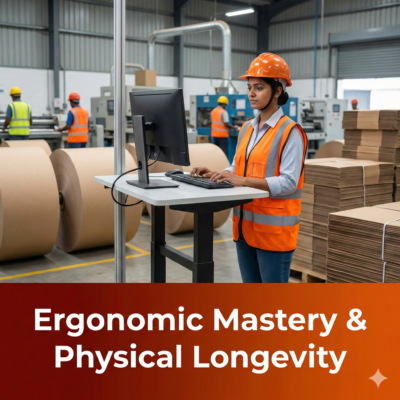
Ergonomic Mastery & Physical Longevity

We treat the physical body as an asset. This program teaches ergonomic postures and corrective stretching to reduce chronic pain and absenteeism caused by repetitive manual tasks or stationary desk work.

  • Musculoskeletal health
  • Chronic pain reduction
  • Posture correction
  • Injury prevention

The Impact of Empowerment

↓ Abs

Lower absenteeism in participating departments

95%+

Positive Engagement Rating from Shopfloor staff

Feedback

Direct improvements in rest area & water access

Frequently Asked Questions

Common queries about integrating wellness into industrial operations.

How does wellness training impact manufacturing productivity? +
Wellness initiatives are operational necessities, not just perks. By addressing physical fatigue and mental stress, we see a direct correlation with reduced unplanned absenteeism and higher quality output. A physically resilient workforce maintains consistent energy levels throughout long shifts, leading to fewer errors and higher overall throughput.
What is the difference between standard safety training and "Holistic Wellness"? +
Standard safety training focuses on compliance and hazard avoidance (e.g., PPE usage). Holistic wellness goes further by addressing the root causes of unsafe behavior, such as cognitive fatigue, stress, and musculoskeletal strain. We combine Behavior-Based Safety (BBS) with proactive health strategies to create a "Culture of Care" where safety becomes a subconscious habit.
How do you address mental health on a traditional shop floor? +
We demystify mental health by focusing on practical "Cognitive Resilience." Instead of abstract therapy concepts, we teach actionable skills like stress de-escalation techniques, focus management, and peer-to-peer support. This helps frontline workers manage the pressure of production targets without stigma, fostering a psychologically safe environment.
Can ergonomic mastery really reduce chronic pain for manual laborers? +
Yes. Our "Ergonomic Mastery" program focuses on biomechanical micro-adjustments in posture and lifting. By training workers on the biomechanics of their specific roles—whether lifting paper reels or standing at assembly lines—we significantly reduce the risk of Musculoskeletal Disorders (MSDs), leading to greater physical longevity.
How do you ensure wellness training adoption among unskilled workforces? +
We bypass complex theory in favor of visual, activity-based learning. Our sessions utilize local languages, interactive skits, and hands-on demonstrations. By making the content relatable and immediately applicable to their daily reality, we achieve high engagement rates and faster behavioral change compared to traditional classroom lectures.
What role does leadership play in sustaining a wellness culture? +
Supervisors are the "cultural architects" of the shop floor. Our Adaptive Wellness Leadership module trains managers to recognize early signs of burnout and fatigue in their teams. By shifting from a purely transactional management style to one of compassionate accountability, leaders can drive high performance while protecting their team's well-being.