Why Frontline Wellness?
Manufacturing roles are physically demanding, involving long shifts and manual handling. We recognized that to maintain high productivity, we must invest in the well-being of the people behind the machines. By addressing health proactively, we turn wellness into a strategic pillar of operational excellence.
- ✔ Reduced fatigue-related injury risk.
- ✔ Stronger employee-employer trust.
- ✔ Enhanced morale for long-term retention.

A Holistic Wellness Framework
Moving beyond generic health talks. We deliver structured interventions that align human well-being with organizational throughput.
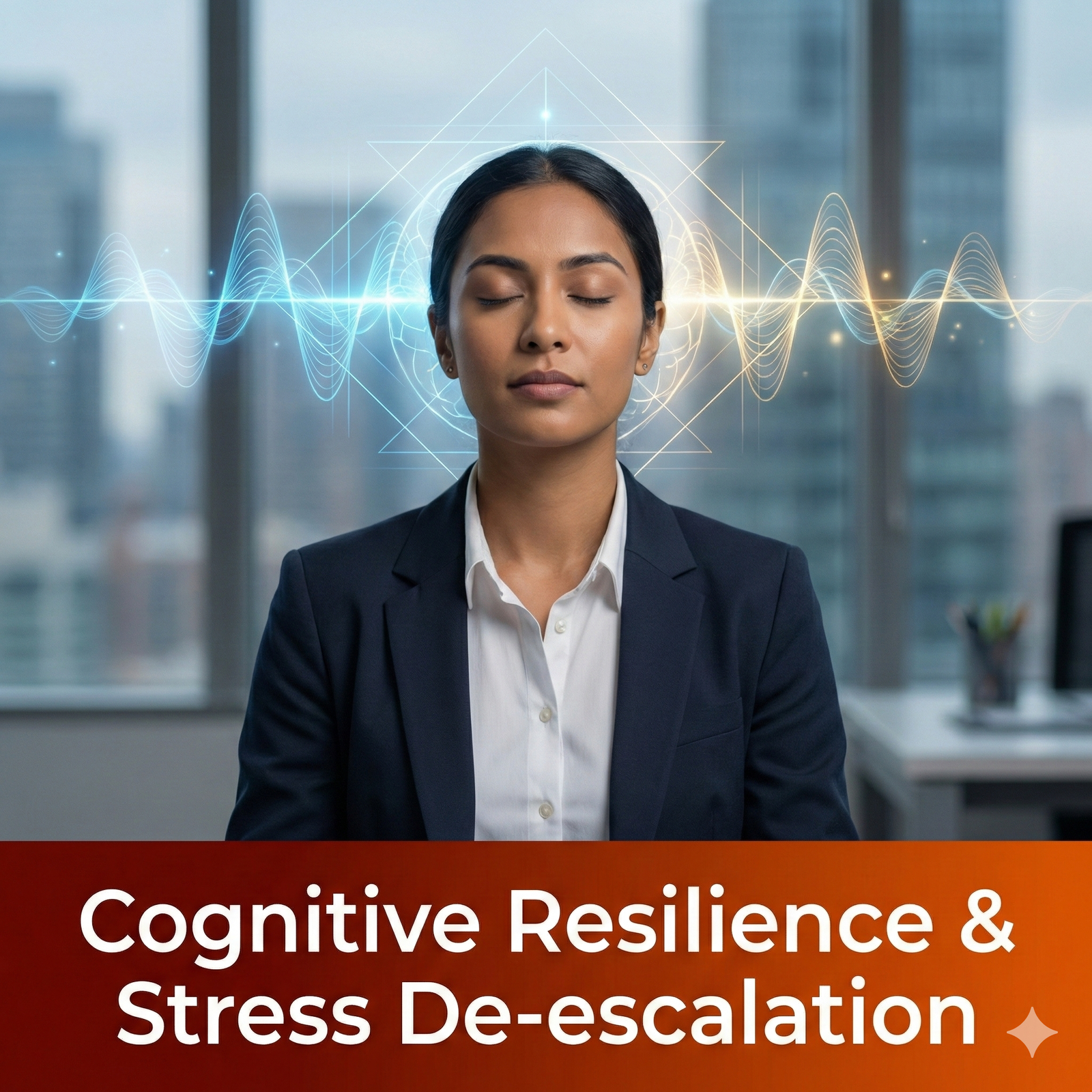
Cognitive Resilience & Stress De-escalation
In high-pressure manufacturing and volatile corporate environments, mental clarity is the ultimate performance multiplier. This program teaches teams to manage the "biological hijack" of stress, ensuring rational decision-making during peak production or crisis moments.
- Panic response reduction
- Focused attention training
- Emotional self-regulation
- Burnout prevention
Digital Wellness & Cognitive Load Control
Digital transformation often brings information overload. We address "always-on" fatigue by providing frameworks for deep work, effective notification management, and cognitive recovery, ensuring technology remains a tool rather than a stressor.
- Deep work enablement
- Digital fatigue recovery
- Enhanced focus cycles
- Tech-stress mitigation
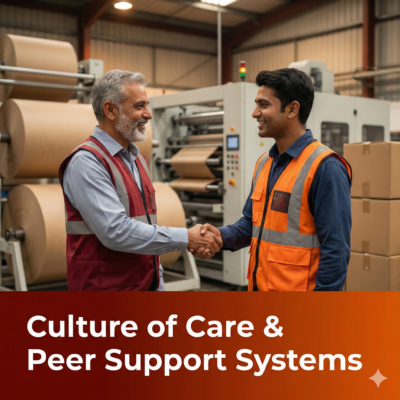
Culture of Care & Peer Support Systems
Wellness is a collective responsibility. This project establishes peer coaching networks where employees are trained to recognize signs of struggle in their colleagues, creating a psychologically safe environment that improves retention and trust.
- Peer-to-peer empathy
- Communication activation
- Trust-based culture
- Social safety net
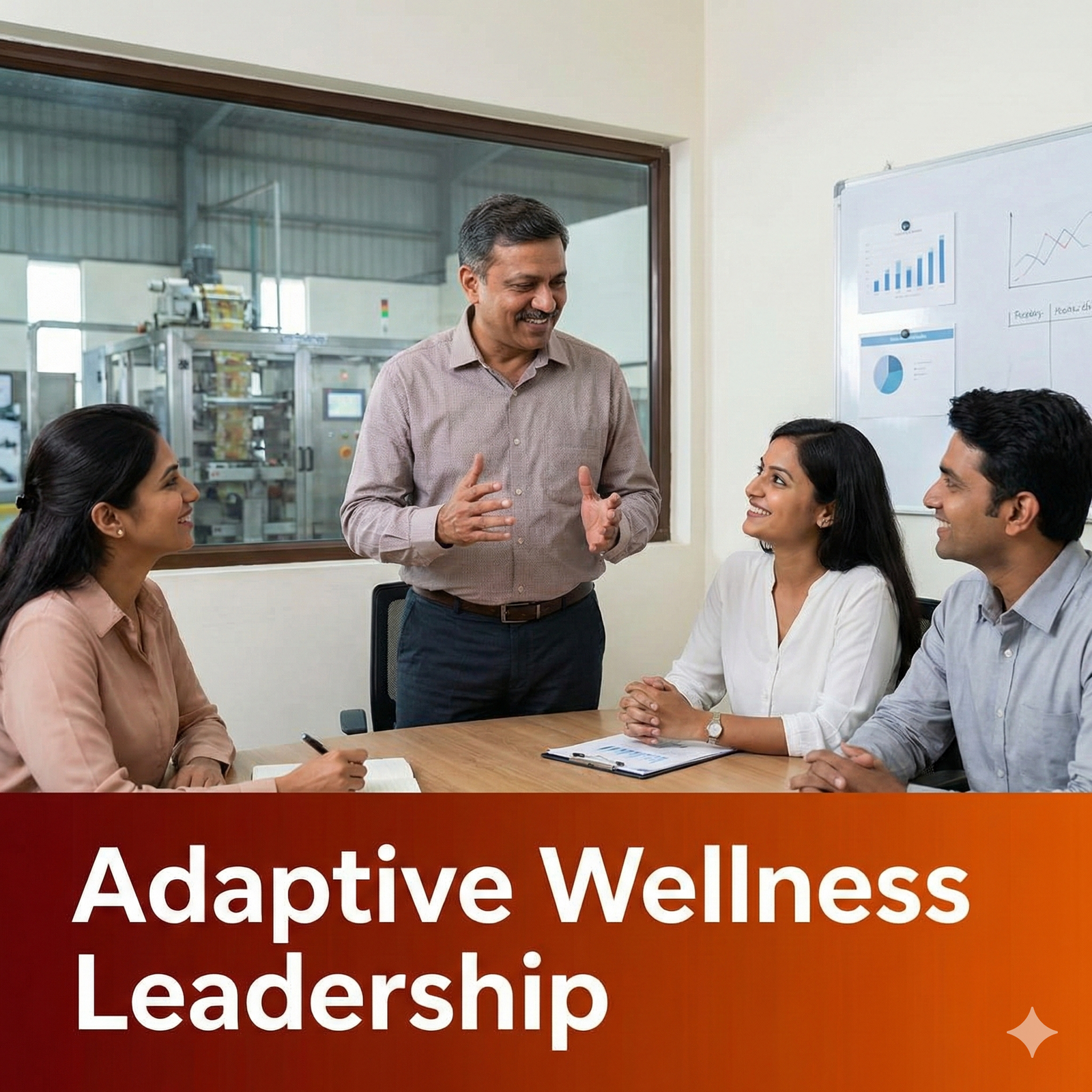
Adaptive Wellness Leadership
Supervisors are the primary influencers of workforce morale[cite: 106]. We train leaders to balance production targets with the paramount need for a safe, healthy environment, turning frontline managers into wellness advocates.
- Empathy-led management
- Burnout recognition
- Morale boosting skills
- Balanced KPIs

Nutritional Vitality & Energy Management
Sustained performance requires the right fuel. We provide practical guidance on hydration and nutrition tailored for hot factory environments or demanding corporate desk roles to prevent mid-day energy crashes.
- Metabolic energy sync
- Hydration protocols
- Shift-work nutrition
- Peak focus fueling
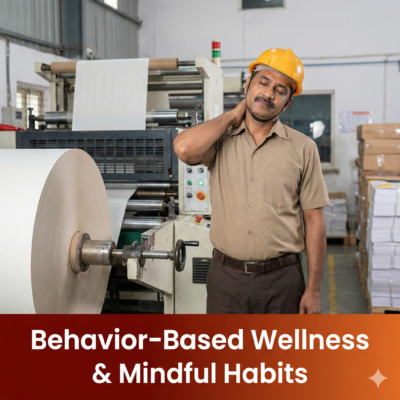
Behavior-Based Wellness & Mindful Habits
Knowledge alone does not change behavior. Using Behavioral Science (BBS principles), we convert wellness protocols into "muscle memory" habits that employees perform automatically, even during intense workloads.
- Habit loop formation
- Safe Choice architecture
- Feedback-led change
- Long-term adherence
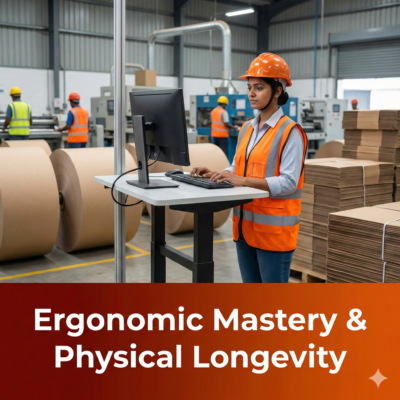
Ergonomic Mastery & Physical Longevity
We treat the physical body as an asset. This program teaches ergonomic postures and corrective stretching to reduce chronic pain and absenteeism caused by repetitive manual tasks or stationary desk work.
- Musculoskeletal health
- Chronic pain reduction
- Posture correction
- Injury prevention