From Accredited COs to Diagnostic Assessments
Broad syllabus outcomes make generative AI hallucinate shallow, generic multiple-choice questions. Master the 3-tier engineering pipeline: extract accredited Course Outcomes, execute the Anchor Injection constraint, and generate high-fidelity diagnostic MCQs with labeled cognitive misconceptions.
Measurable Student Work Artifacts
Strips passive verbs like "understand" or "know", enforcing observable Bloom's evidence (Analyze, Evaluate, Formulate).
Hard Boundary Ingestion
Explicitly labels topics out-of-scope and stops premature generation with the command: "Do not generate tasks yet."
Intentional Distractor Engineering
Outputs 1 Correct Key + 3 Labeled Misconceptions for immediate diagnostic triage and classroom remediation.
Step 1: Locate Your Source CO from the Session Plan
Before generating an assessment with an LLM, open your institution's approved Session Plan. Isolate exactly one accredited Course Outcome (CO) mapped to your active teaching unit.
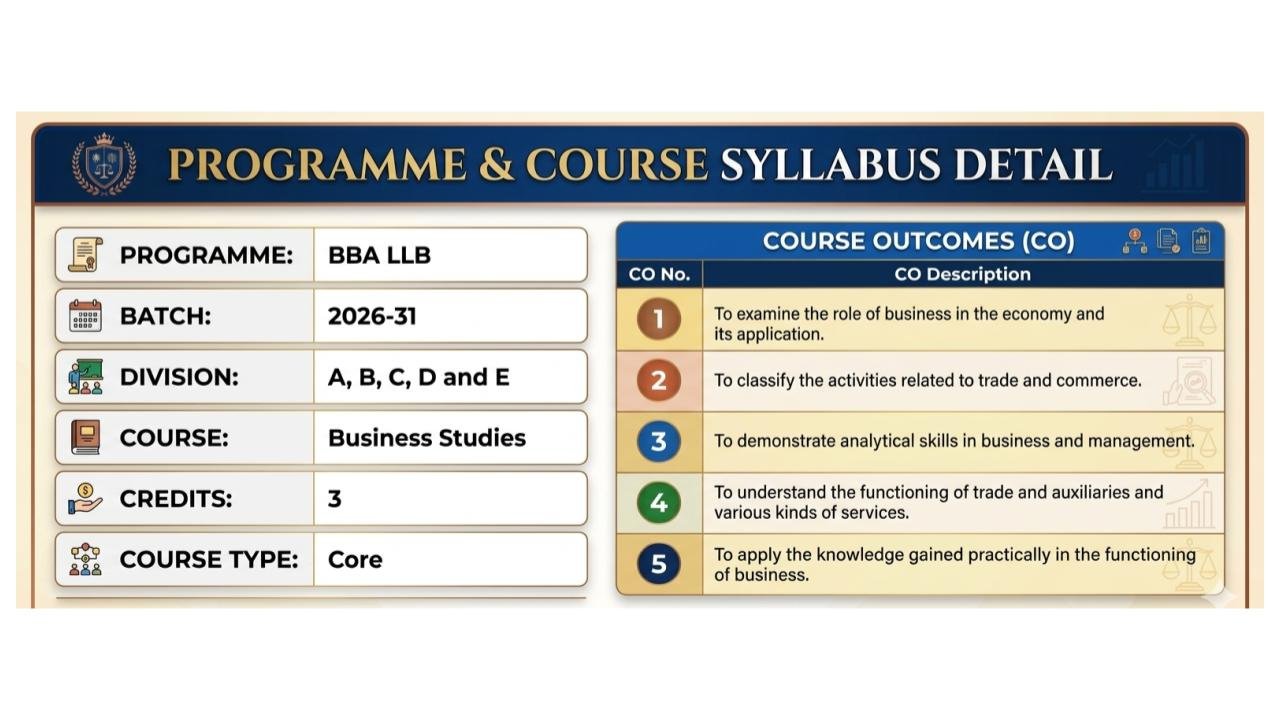
Launch
Open your preferred LLM workspace (Google Gemini, Claude, ChatGPT, or Microsoft Copilot).
Select
Pick 1 specific course from your current semester teaching load (e.g., Business Studies, Company Law).
Isolate
Copy exactly 1 accredited Course Outcome statement verbatim from your session blueprint.
CLO Deconstruction & Rubric Alignment Prompt
Copy this prompt directly into Gemini, ChatGPT, or Claude. Replace the bracketed fields with your specific course title, syllabus unit, and target Course Outcome.
Why AI Assessment Design Fails Without Granular CLOs
Large Language Models behave like unconstrained creative engines unless bound by precise cognitive outcomes. When you give Gemini a broad Course Outcome (e.g., "Understand business operations"), it defaults to elementary definitions and generic trivia. Crafting rigorous CLOs first solves three fundamental assessment challenges:
Constraint Enforcement for AI Scenarios
When an AI simulation prompt includes exact CLO boundaries (e.g., "CLO 1: Evaluate shop-floor defect escalation"), the model is forced to generate realistic operational crises rather than textbook essay questions.
Automated Diagnostic Scorecard Calibration
To produce an automated 3-line diagnostic scorecard at the end of a simulation, the AI must know what specific mastery gaps to report. Granular CLOs supply the taxonomy for immediate student remediation.
Defense Against AI Ghostwriting & Plagiarism
Assessments anchored to active Bloom’s verbs require observable artifacts (such as live role-plays, defect triage logs, and prompt audit trails) that cannot be bypassed with simple copy-pasting from a chatbot.
The Anchor Injection Prompt
Attach your approved syllabus extract and teaching log directly into your AI chat window, then run this anchoring script to set strict conceptual guardrails before creating questions.
Attach your Syllabus.pdf (Target Unit) and Session_Log.docx (Concepts taught to date) into your LLM chat window.
The command: "Do not generate tasks yet." halts the LLM's compulsive bias to produce premature, unaligned assessment items.
Why "Anchor Injection" Is Essential in AI Assessment Design
Skipping this intermediate verification step is the single most common cause of flawed AI assessments. Pausing the model before question generation yields four foundational advantages:
Eliminates Curriculum Drift
Forces the model to identify what was actually taught versus textbook theories that were skipped or reserved for future semesters.
Hard Boundary Isolation
Explicitly labels "topics out-of-scope", preventing students from being tested on concepts never covered in the lecture.
Arrests Premature Generation
Neutralizes the LLM's compulsive bias to start producing questions immediately before verifying institutional alignment.
Human-in-the-Loop Audit
Gives the professor a 15-second checkpoint to confirm that the AI's internal scope matches the classroom reality before proceeding.
Prompt Architecture for Diagnostic MCQs
Transform multiple-choice questions from simple recall checks into diagnostic instruments by requiring the model to architect intentional distractors rooted in predictable student misconceptions.
The key constraint: "provide an explicit diagnostic rationale identifying the exact misconception." This prevents arbitrary distractors and forces cognitive modeling of erroneous student pathways.
Item + Key + 3 Labeled Misconceptions. Each incorrect choice serves as an actionable diagnostic metric for real-time post-test remediation.
Why Distractor Engineering Replaces Traditional Testing
Standard multiple-choice questions typically pair one correct answer with three arbitrary "plausible-sounding" wrong answers. Diagnostic MCQs, by contrast, treat every distractor as a specific cognitive audit:
Cognitive Error Modeling
Forces the AI to simulate known student pitfalls (e.g., confusing middle management with supervisory roles) rather than generating random incorrect facts.
Instant Remediation Keys
Because each option has a labeled diagnostic rationale, an instructor immediately knows why a cohort failed a question and exactly what concept to re-explain.
Prerequisite Readiness Audit
Deploys at the beginning of a semester or unit to pinpoint missing foundational concepts before introducing higher-order Bloom tasks.
Turnkey LMS Integration
Outputs structured feedback suitable for direct import into Moodle, Canvas, or Google Forms, delivering personalized feedback to students on click.
Frequently Asked Questions
Pedagogical and engineering principles behind CLO deconstruction, negative constraints, and diagnostic MCQs.
What is the difference between a broad CO and a granular CLO? +
A Course Outcome (CO) is a broad, overarching capability prescribed in the statutory syllabus for accreditation (e.g., "Analyze organizational systems"). A Course Learning Outcome (CLO) deconstructs that outcome into a specific, single-session observable action (e.g., "Evaluate shop-floor supervisor safety protocols during assembly line bottlenecks") that can be directly tested and graded.
Why does the CLO prompt strictly ban verbs like "understand" or "know"? +
Under Outcome-Based Education (OBE) principles (such as NBA and NAAC frameworks), learning outcomes must be observable. You cannot directly observe a student "understanding" a theory, but you can directly observe them critiquing an audit report, diagnosing a supply-chain breakdown, or formulating an executive response.
Why is the negative constraint "Do not generate tasks yet" mandatory? +
Large Language Models have a compulsive conversational bias to immediately produce output. Without this negative constraint, the model will instantly generate test questions based on general web knowledge rather than waiting for you to verify what was actually covered in your session log.
How do diagnostic MCQs differ from typical multiple-choice questions? +
Typical MCQs use arbitrary "distractors"—random incorrect options designed to trick the test-taker. Diagnostic MCQs require that every single wrong option represent a known, documented student misconception. When a student chooses option C, the instructor immediately knows which specific mental model was flawed.
Can these prompts be used across disciplines outside Business Studies? +
Yes. The prompts employ universal pedagogical frameworks (Bloom's Revised Taxonomy, OBE deconstruction, and cognitive error modeling). They work equally well for Law, Engineering, Medicine, Humanities, and Data Science courses.